
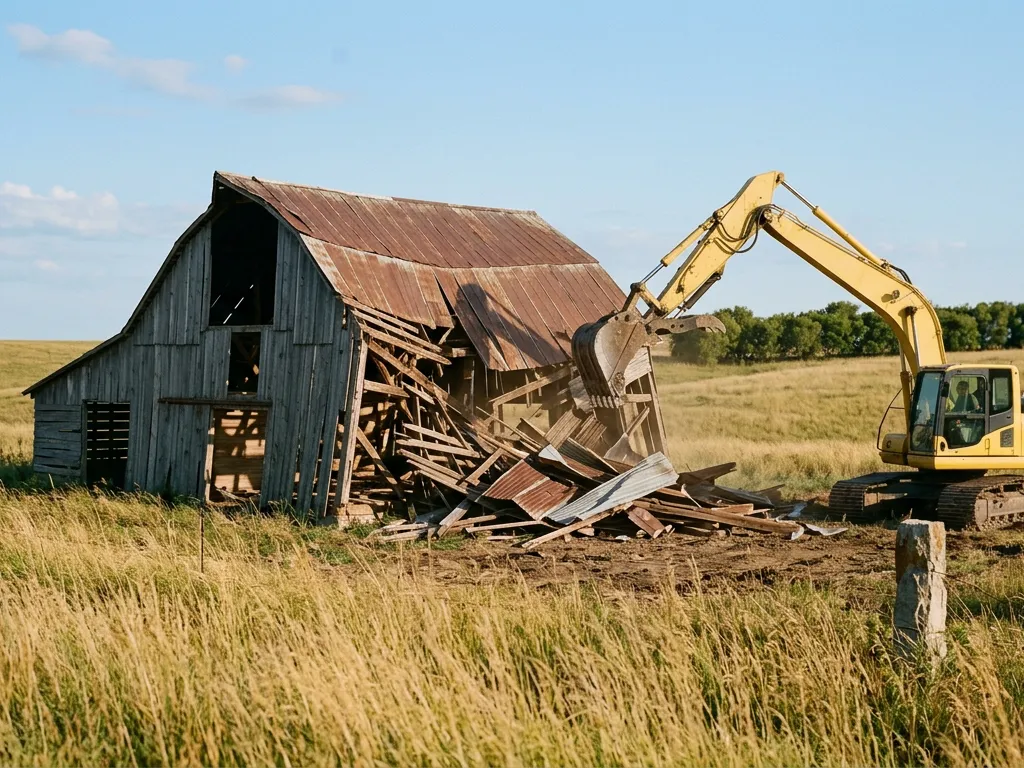
Barns, sheds and outbuildings
Topeka Demolition: Barn Demolition Around Topeka, Kansas
Old hay barns, pole sheds, machine sheds and leaning outbuildings on the acreages around Topeka, taken down with the timber and tin sorted.
- Topeka and 10 towns within 20 miles
- Written price before work starts
- Permit, sewer cap and landfill steps explained
- Local, licensed, insured contractors
Topeka Demolition connects owners of farms and acreages around Topeka with local contractors who take down barns, pole sheds, chicken houses and the other outbuildings that a farmstead collects, out past the city edge in Shawnee, Jefferson, Osage and Wabaunsee counties.
Taking down a leaning barn on your schedule starts around $1,200; one that comes down on its own in a spring wind can take a tractor, a fence line and a power drop with it, and the cleanup alone can pass $10,000.
Typical price range
$1,200 to $25,000
The published range for barn demolition (Fixr). A small pole shed sits near the bottom; a large timber-frame or stone-foundation barn with a loft full of old hay sits near the top. Salvageable siding and beams can bring the net cost down.
Calls answered Monday to Friday 7 a.m. to 6 p.m., Saturday 8 a.m. to 2 p.m.
Signs a barn is ready to come down
- The roof line has a visible dip or the ridge has broken
- Posts or sill timbers have rotted at ground level
- Tin is peeling off in sections after every storm
- The barn leans, or the doors no longer track
- Livestock or equipment can no longer safely go inside
Salvage first, then the machine
Weathered barn siding, hand-hewn beams and old tin have buyers, and a contractor who does salvage will price the job with that in mind. Salvage takes hand work before the excavator starts, so it adds time even when it lowers the bill. If you want the boards for your own project, say so on the first call so they are set aside rather than crushed.
What comes down and what gets hauled
After salvage, an excavator with a grapple pulls the structure down in one direction, away from fences and lines. Tin is stacked for scrap, wood goes to the landfill or a burn site where the county allows it, and concrete floors or stone footings are broken out if you want the ground back for hay or a new building.
- Old hay and manure are hauled separately, since they are wet, heavy and not demolition debris
- Fuel tanks and old chemicals in the barn are found and handled before the machine starts
- Electrical drops to the barn are disconnected by the utility or an electrician
Permits outside the city
Agricultural buildings are not exempt everywhere. Unincorporated Shawnee County requires a demolition permit for any building or structure other than signs and fences. On acreages near Meriden and Maple Hill, the county planning office in Jefferson or Wabaunsee County is the place to ask before the work is scheduled.
Barns often share a farmstead with a farmhouse that is also past repair. A contractor can price both on one visit; see house demolition for what the house adds.
Old farm buildings and what hides in them
Barns collect things over decades. Before demolition, walk the building for fuel cans, old pesticide and herbicide containers, used oil, batteries and paint, and set them aside for proper disposal; none of it belongs in a load of demolition debris. Old asbestos-cement siding and roofing panels turn up on some farm buildings and should be tested before they are broken. A contractor will also ask about wells, cisterns and pits near the barn, since a machine tracking over an open cistern is a hazard.
Stone and concrete foundations under old barns can stay or go. Leaving a low stone wall in place costs nothing; taking it out returns the ground to pasture or opens a clean pad for a new shop or pole building.
Questions people ask
How much does barn demolition cost near Topeka?
Published figures run $1,200 to $25,000. Size, the condition of the frame, a concrete floor and how much salvage comes out move it within that range.
Is barn wood worth anything?
Often. Weathered siding, beams and tin can offset part of the cost when the contractor salvages them, and some owners keep them for their own projects.
What are the signs a barn should be torn down?
A sagging roof, rotted posts or sills, a lean you can see from the road, or tin coming off in sections. Once the frame is failing, the barn is a hazard to anything stored inside.
Do I need a permit to remove a barn in Shawnee County?
In unincorporated Shawnee County, yes: the County requires a demolition permit for buildings, with signs and fences the only exceptions. Other counties have their own offices.
Can old hay and manure go with the barn?
They are usually hauled separately because they are not demolition debris, and landfills price them differently.
Get a demolition price in writing
Tell the contractor what is coming down, where it is, and what should be left behind: bare dirt, a slab, or a seeded lot.
Call (785) 268-2537